Home/News/Zirconia All-Ceramic Dentures – The Zirconia Color Section
Zirconia all-ceramic restorations are widely used in denture restoration due to their excellent mechanical properties, biocompatibility, and aesthetic effects. Compared to traditional porcelain-fused-to-metal teeth, the color characteristics of zirconia ceramics make them more similar to natural teeth, providing patients with both aesthetic and natural restoration effects, which greatly meets the modern dental aesthetic needs.
As the public’s demand for denture aesthetics gradually increases, color is one of the most important performance indicators of zirconia dentures. During the production of dentures, understanding color, comparing colors, and precisely matching colors are particularly important.
In the previous text, I hope everyone has gained a certain understanding of dentures’ colors and color comparison. The accuracy and stability of the color of zirconia dentures are mainly determined by the zirconia ceramic blocks.
The color of zirconia ceramic blocks and dentures mainly have the following three implementation methods:
| serial number | Zirconia porcelain blocks and dentures | Color realization method |
| 1 | White zirconia porcelain block | Immersion/brushing dyeing solution (including dyeing solution, end-cutting solution, bridge improvement solution, special color dyeing solution, etc.) |
| 2 | Pre-dyed single-layer colored zirconia | Apply the cutting end fluid |
| 3 | Pre-dyed multi-layer gradient colored zirconia | No staining solution required |
Next, we will introduce to you one by one the current status and advantages and disadvantages of various methods for achieving the colors of zirconia porcelain blocks/implants.
1.White zirconia porcelain block + immersion / brushing of coloring solution
White zirconia porcelain block + immersion / brushing of coloring solution is a classic method for coloring zirconia dentures. The main process is: the white zirconia porcelain block is carved and milled into a dental crown → brush / immerse with the corresponding color number of coloring solution → dry → high-temperature sintering.
The composition of the coloring solution mainly includes the following components:
| serial number | composition | function |
| 1 | colorant | The main components are metal colorants, which commonly include ferric chloride (brownish red), cobalt chloride (blue), manganese chloride (purple), erbium chloride, praseodymium chloride, neodymium chloride, etc. The concentration is usually between 0.1% and 3%. |
| 2 | solvent | Deionized water or distilled water, accounting for approximately 70% to 85%. |
| 3 | stabilizer | Such as glycerol or ethylene glycol, accounting for 8% to 15%, to prevent the solution from evaporating too quickly. |
| 4 | dispersing agent | For example, polyethylene glycol (PEG-200 or PEG-400), accounting for 16.3%, helps the colorant penetrate uniformly. |
| 5 | buffer agent | For example, citric acid is used to regulate the pH value and reduce corrosiveness. |
According to the type of usage, the staining solutions can be classified into the following types:
(1) Coloring solution: including VITA-16 color and VITA-26 color, etc., which are used to achieve the main color of teeth;
(2) Cutting edge solution: used to adjust the transparency of the denture cutting edge;
(3) Pontic solution: used to adjust the color depth of the denture missing body;
(4) Special color staining solution: including gingival color, fissure color, cervical margin color, etc., used for special coloring at the corresponding positions of the denture.
The color realization method of white zirconia ceramic blocks + immersion / brushing with staining solution has the following disadvantages:
(1) The process is cumbersome: it needs to go through multiple procedures such as cleaning, immersion / brushing, drying, and sintering, and each procedure has strict requirements for time, temperature, tool selection (such as No. 6 porcelain brush, infrared drying lamp);
(2) Strict pollution control requirements: staining should be carried out in a dust-free, dry environment, and protective equipment (such as gloves, goggles) should be worn. Improper operation may introduce pollution (such as hand sweat, oil stains), resulting in white spots, yellow spots, etc.;
(3) Poor stability of the staining solution: due to the large amount of organic substances in the staining solution, the stability of the liquid is poor, and the color and uniformity of the staining solution will change after a long time of use;
(4) Complicated transportation of the staining solution: liquid transportation is relatively cumbersome, especially for international transportation and air transportation, and strict safety checks for the staining solution are very strict;
(5) Poor color stability of the staining solution: the density fluctuation of the zirconia ceramic block blank, the formula of the staining solution, the soaking time, and the furnace temperature control are improper, which may result in color deviation (such as red/yellow/grey) or insufficient transparency;
(6) Complicated waste liquid treatment: the waste liquid of the staining solution contains metal ions, and it needs to undergo special sewage purification technology treatment before discharge.
2.Pre-dyed single-layer colored zirconia + Brushing of cutting end liquid
Due to the complexity of the white zirconia dyeing process and the fact that the dyeing liquid is an organic liquid with unstable color, the dyeing effect is not very good. Therefore, colored zirconia has emerged in the market. Pre-dyed single-layer colored zirconia porcelain blocks (referred to as “colored zirconia”) as an upgraded version of white zirconia porcelain blocks, have their own color and avoid the influence of various factors such as dyeing liquid formula, environmental temperature, and human operation during the dyeing process of white zirconia, further avoiding fluctuations in denture dyeing effect, overall aesthetic effect, and color mismatch.
Material coloring inside, adding coloring agent before sintering: Add metal oxide pigments (such as iron oxide, yttrium oxide, praseodymium oxide, etc.) to zirconia powder (mainly composed of ZrO₂), and through high-temperature sintering, the pigments are evenly distributed inside the ceramic to form inherent color.
The color realization method of pre-dyed single-layer colored zirconia porcelain blocks + brushing of dyeing liquid has the following advantages and disadvantages:
| serial number | advantage |
| 1 | The zirconium blocks have their own color and do not require cumbersome processes such as soaking in dyeing solution. This significantly reduces the time for denture production and improves the production efficiency. |
| 2 | The color of zircon is stable. Compared with white zircon that is dyed through soaking, the coloring elements in colored zircon are evenly distributed, and are less affected by the manufacturing method and the environment, thus having high color stability. |
| serial number | drawback |
| 1 | The stockpile of zirconium blocks is large. Each color and each thickness of zirconium blocks must be equipped with a corresponding stockpile. |
| 2 | There is no color gradient effect, and the color gradient effect of the dentures is poor; although there are methods such as applying liquid to the cutting edge, the effect on the transparency and color change of the cutting edge is relatively small. |
3. Pre-colored Multi-layer Gradient Colored Zirconia Ceramic Blocks (No Coloring Required)
As mentioned above, although pre-colored single-layer colored zirconia ceramic blocks can avoid the defects caused by the coloring solution, pre-colored single-layer colored zirconia is still unable to achieve the natural effect of teeth and has poor aesthetic effect of dentures.
Therefore, Dezime Ceramic has launched pre-colored multi-layer gradient colored zirconia ceramic block products.
The Dezime Ceramic 3D Pro-ML multi-layer zirconia ceramic block product is a restoration material with triple gradient of color, transparency and intensity. Compared with single-layer white zirconia ceramic blocks and single-layer colored zirconia ceramic blocks, when the processing plant uses 3D-PRO ML multi-layer zirconia ceramic blocks to make denture restorations, after the denture is sintered, it only needs simple glazing to be tried on and shipped. There is no need to immerse in the coloring solution for coloring, and at the same time,the process of stacking porcelain on the cutting end of the denture for decoration is reduced, which significantly shortens the production time of dentures,improves production efficiency and denture delivery efficiency.
The Dezime Ceramic 3D Pro-ML multi-layer gradient zirconia ceramic block is an innovative dental restoration material. It refers to the use of advanced hydrothermal technology to prepare nano zirconia powder. Based on this powder, the 3D-Pro series multi-layer gradient zirconia ceramic blocks were developed. This innovative design enables a natural transition of color, strength and transparency between layers, without layer-by-layer gradient, thus fully and realistically reproducing the transparent beauty and biomechanical characteristics of natural teeth. The dentin and enamel of natural teeth have different transparencies (dentin is yellowish and has low transparency, while enamel is transparent and has high transparency), and when exposed to light, they will produce a lustrous effect (light scattering presents a soft luster) and fluorescence effect (blue light reflection under ultraviolet excitation), while the core goal of the 3D multi-layer transparency gradient technology is to achieve visual consistency between dentures and natural teeth through material layering and transparency regulation.
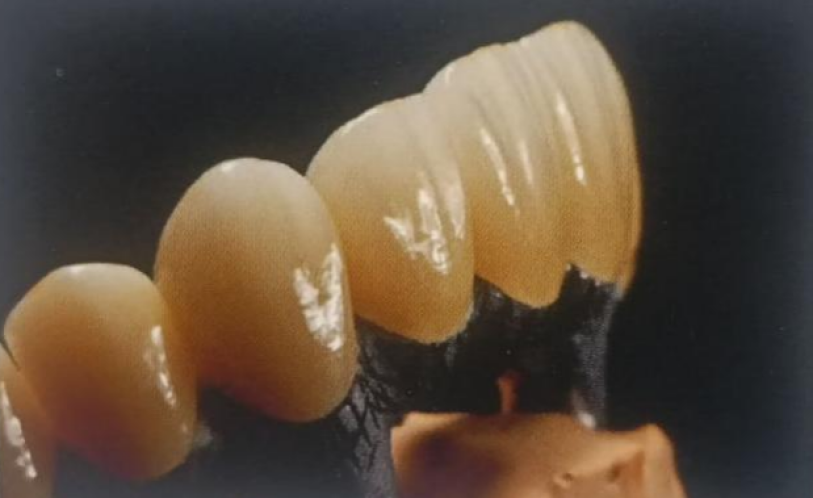
Multilayer structure design: Functional differentiation from the base to the surface layer:
|
gradation |
material characteristics | Color function | Simulate the structure of natural teeth |
| basal layer |
High-purity zirconia (containing a small amount of colorant) |
Provide basic strength and determine the main color of the denture | Corresponding to the root of the tooth or the supporting structure of the restoration |
| Dentin layer |
The concentration of the colorant is relatively high and the transparency is relatively low |
It presents the yellow and brown tones and saturation of dentin | Corresponding to the natural dentin layer |
| Gradient transition layer | Gradient distribution of colorants and transparent phase materials | Achieve natural color transitions between layers (such as from the neck to the cut end) | Simulate the color gradient of teeth from the neck to the cutting end |
| Enamel layer | The colorant concentration is low and it contains transparent phase materials | The translucency and luster of simulated tooth enamel | Corresponding to natural tooth enamel |
The 3D-Pro series multi-layer gradient zirconia porcelain blocks not only incorporate 16 classic tooth colors from Vita and 4 colors from the BL series, but also simplify the cumbersome internal staining and drying process, optimize the production process, and bring convenience and efficiency to chairside aesthetic restoration. With its unique 6-layer stacking and 11-layer gradient design, it ensures a natural color transition even for large-span bridge restorations, perfectly matching the color reduction pattern from the neck to the cutting edge of natural teeth, thus presenting an astonishing top-level aesthetic effect. At the same time, this material is both flexible and hard, ensuring the durability of the restoration.
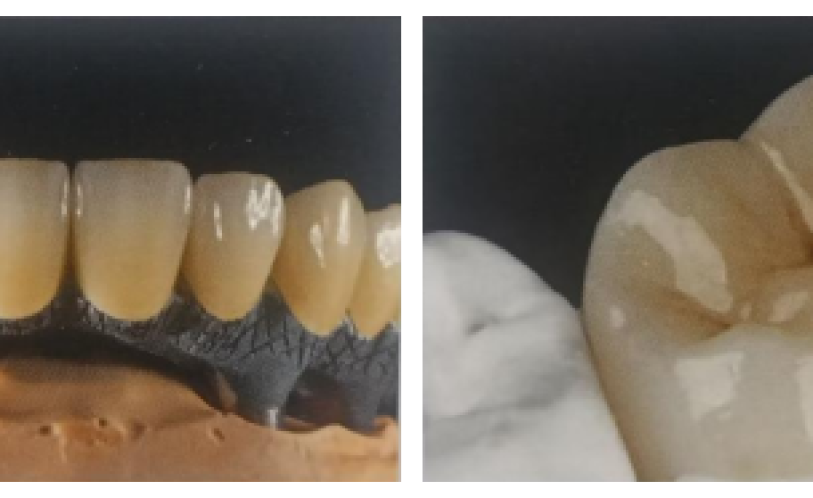
The article introduces three methods for achieving color in zirconia all-ceramic dentures, with a focus on elaborating on the unique advantages of 3D-Pro ML multi-layer zirconia ceramic blocks in the field of dental restoration. 3D-Pro ML not only simplifies the production process and improves efficiency, but also ensures the beauty and durability of the restoration through its superior material properties. As an advanced digital oral restoration material, 3D-Pro ML provides doctors and patients with more precise and efficient restoration solutions, meeting the modern dental medicine’s demand for both beauty and functionality.
Looking forward to the future, we look forward to exploring more outstanding restoration technologies in practice. Welcome to call and jointly exchange product technologies, and work together to promote the advancement of dental medical technology.
De Corematrix, your trusted expert in zirconia materials!